
Goodyear Lawn Edging Services
Choose our Lawn Edging for professional craftsmanship, durable materials, and a flawless finish that elevates your curb appeal and keeps your landscape looking pristine all year long.
Get a Free QuoteOur Goodyear Landscaping & Yard Care Services
When to Schedule Lawn Edging in Goodyear, Arizona – Seasonal Guide
In Goodyear, Arizona, the best times to schedule lawn edging are typically in early spring and late fall. These periods align with the region’s mild temperatures and reduced risk of extreme heat or frost, making it easier to achieve crisp, clean edges without stressing your turf. Neighborhoods near Estrella Mountain Ranch and Palm Valley often experience unique microclimates, so it’s important to consider local conditions when planning your lawn care routine.
Goodyear’s arid climate, characterized by low humidity and sporadic rainfall, means soil can become compacted and dry, especially during the summer. Homeowners should also be mindful of the city’s clay-heavy soils and the shade provided by mature trees in areas like Wildflower Ranch. For more information on local environmental guidelines, visit the Sudbury municipal site. Timing your lawn edging to avoid peak drought periods and after the last frost date ensures healthier grass and a more polished landscape.
Local Factors to Consider for Lawn Edging in Goodyear
- Tree density and shade coverage, especially in established neighborhoods
- Soil type (clay-heavy or sandy soils affect edging depth and frequency)
- Seasonal precipitation patterns and drought risk
- Terrain and slope, which can impact water runoff and edging precision
- Municipal restrictions or water usage guidelines
- Proximity to landmarks like Estrella Mountain Regional Park, which may influence microclimates
Benefits of Lawn Edging in Goodyear
Enhanced Curb Appeal
Weed Growth Prevention
Defined Landscape Borders
Low Maintenance Solutions
Increased Property Value
Professional Installation Expertise
Goodyear Lawn Edging Types

Plastic Lawn Edging
-
Metal Landscape Edging
-
Stone Garden Borders
-
Rubber Edging Solutions
-
Concrete Lawn Borders
-
Wooden Landscape Edging
-
Brick Garden Edging
Our Lawn Edging Process
Site Evaluation
Marking Edges
Cutting the Edge
Debris Removal
Final Inspection
Why Choose Goodyear Landscape Services
-
Goodyear Homeowners Trust Us
-
Expert Lawn Maintenance
-
Reliable Scheduling
-
Competitive Pricing
-
Professional Team
-
Satisfaction Guarantee
-
Personalized Service
Coordinating Lawn Edging Services with Goodyear's Municipal Public Works Operations
Lawn edging in Goodyear requires attention to how turf borders interact with municipal infrastructure, including curb lines, sidewalks, and stormwater inlets. When edging along public rights-of-way or adjacent to city-maintained sidewalks, residents and property managers should ensure that clippings, soil debris, and organic material are not deposited into street gutters or storm drain openings. The Goodyear Public Works Department oversees street maintenance and drainage infrastructure, and property owners should verify current green waste collection procedures before placing edging debris curbside. Key coordination points include:
- Sweeping or vacuuming all edging debris away from curb inlets and drainage channels after each service
- Confirming that edging work along public sidewalks does not undercut or damage city-owned hardscape
- Disposing of accumulated soil and turf strips through approved municipal waste channels rather than washing material into the street
Goodyear Public Works Department
190 N. Litchfield Road, Goodyear, AZ 85338
Official Website: Goodyear Public Works Department
Property managers overseeing commercial frontages or HOA common areas should also coordinate with the Goodyear Code Compliance Division, which enforces neighborhood property maintenance standards including turf border appearance and overgrowth along walkways.
How Goodyear's Low-Desert Heat and Alkaline Soils Affect Lawn Edging
Goodyear sits within the Phoenix metropolitan low-desert region, classified under USDA Hardiness Zone 9b, where summer temperatures routinely exceed 110°F and soils trend strongly alkaline. These conditions directly influence lawn edging frequency, tool performance, and turf recovery. Bermudagrass—the dominant warm-season turf across Goodyear subdivisions—grows aggressively during the long summer, sending stolons rapidly across hardscape borders and into decomposed granite beds. Soils in much of western Maricopa County contain caliche layers and compacted alkaline sandy loam, which can dull mechanical edging blades more quickly than softer substrates. The USDA Web Soil Survey provides parcel-level soil data for property owners seeking to understand subsurface conditions before installing permanent edge restraints. Additional local factors include:
- Reflected heat from block walls and concrete walkways accelerates turf runner encroachment into adjacent landscape zones
- Irrigation overspray along turf-to-hardscape transitions promotes soil erosion and sediment buildup in expansion joints
- Monsoon-season runoff can displace loose edging material and deposit turf debris into retention basins and neighborhood washes
Consulting the University of Arizona Cooperative Extension for bermudagrass growth management guidance helps property owners anticipate edging cycles appropriate to Goodyear's climate.
Goodyear's Code Compliance and Stormwater Rules Governing Lawn Edging Practices
While lawn edging itself does not typically require a permit in Goodyear, the activity intersects with several regulatory frameworks that residents and service providers should understand. The city's code compliance standards address overgrown turf encroaching onto sidewalks and curbs, and properties that allow grass to spread unchecked across public walkways may receive violation notices. Stormwater regulations under Arizona's Phase II MS4 program require that landscape maintenance activities—including edging—prevent sediment, clippings, and soil from entering the municipal storm sewer system.
- Edging debris must not be blown or swept into street gutters, curb inlets, or drainage channels
- Soil displaced during mechanical edging should be collected and disposed of on-site or through approved waste streams
- Properties adjacent to flood-control channels or retention basins should take additional care to prevent organic material from entering drainage infrastructure
Goodyear Engineering Department
Official Website: Goodyear Engineering Department
The Goodyear Engineering Department manages drainage and stormwater infrastructure and can clarify site-specific requirements for properties near washes or engineered channels. The Arizona Department of Water Resources also provides landscaping guidance relevant to water-efficient turf management that reduces the frequency and intensity of edging interventions.
Timing and Methods for Lawn Edging in Goodyear's Extreme Desert Climate
Professional lawn edging in Goodyear follows seasonal patterns dictated by turf growth rates and heat exposure. Bermudagrass enters its most aggressive growth phase from late April through September, requiring edging on a cycle of roughly every two to four weeks during peak summer. During winter, when many Goodyear properties overseed with perennial ryegrass, edging frequency typically decreases but remains necessary to maintain clean borders along sidewalks, driveways, and landscape bed transitions. The Turfgrass Maintenance Guide for Low Elevation Arizona from the University of Arizona provides detailed seasonal care calendars applicable to Goodyear properties.
- Mechanical blade edgers produce the cleanest vertical cut along concrete and paver borders but require regular blade replacement due to contact with alkaline, mineral-rich soils
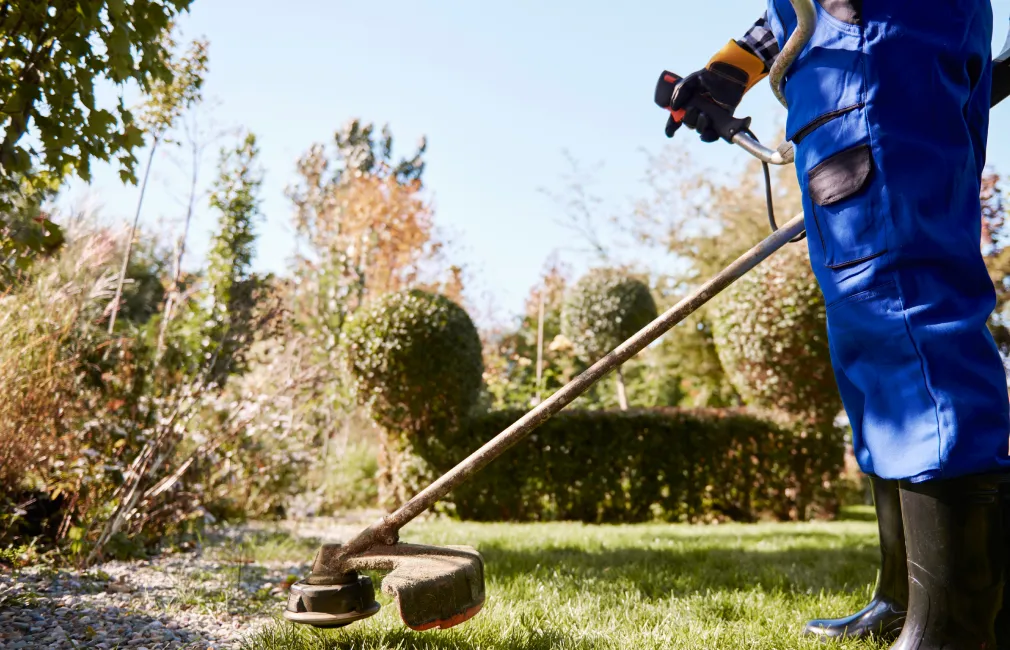
- String trimmer edging is suitable for softer bed transitions but may damage drip irrigation lines or emitter tubing installed near turf borders
- Edging should be performed before irrigation cycles to prevent wet soil from clogging equipment and to allow clean debris collection
- Early morning service timing during summer months reduces heat stress on both turf and workers, and aligns with typical municipal noise ordinance windows
Goodyear Water Services - Water Conservation Program
Official Website: Goodyear Water Services - Water Conservation Program
Property owners managing irrigation overspray issues at turf-to-hardscape borders should consult the Goodyear Water Services - Water Conservation Program for guidance on adjusting spray heads and reducing water waste along edged boundaries.
What Neighborhoods Do We Serve Throughout Goodyear, AZ?
- Estrella — This large master-planned community features extensive turf borders along community pathways and common-area sidewalks, with bermudagrass edges requiring frequent maintenance during the long summer growing season.
- Palm Valley — Established lots in Palm Valley often have mature turf abutting block walls and concrete walkways, where reflected heat accelerates stolon encroachment and demands consistent edging attention.
- Pebblecreek — As an active-adult community, Pebblecreek properties typically maintain well-irrigated turf with clean hardscape transitions along driveways and golf course-adjacent lots.
- Canyon Trails — Newer subdivision fill soils in Canyon Trails may settle unevenly along curb lines, requiring periodic edging adjustments to maintain flush turf-to-concrete borders.
- Centerra — Properties in Centerra feature compact lot designs where turf edges along narrow side yards and shared walkways benefit from precise mechanical edging to prevent overgrowth.
- Estrella Mountain Ranch — Proximity to the Estrella Mountain Regional Park and natural wash corridors means edging debris management is particularly important to prevent organic material from entering drainage pathways.